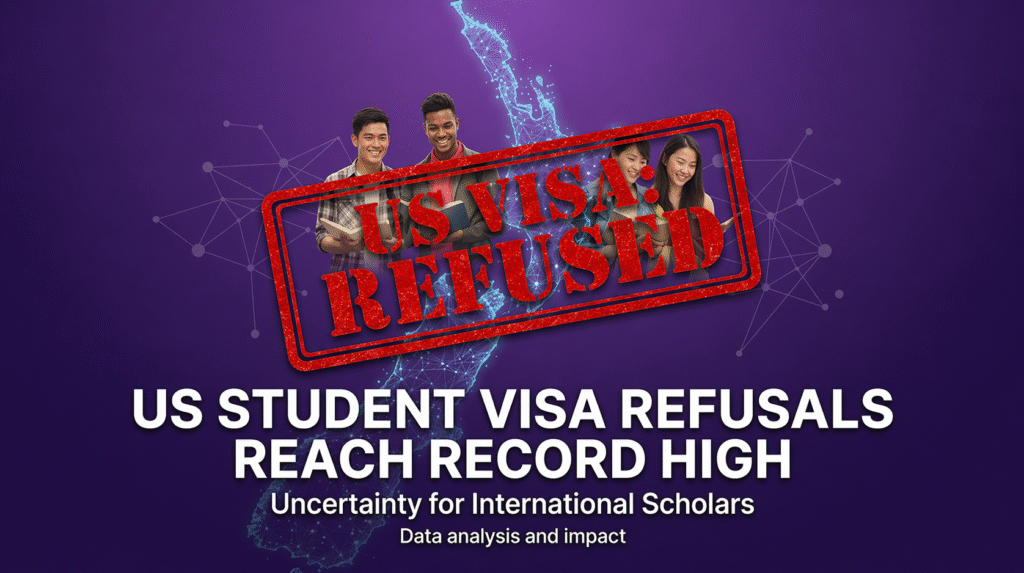
In recent years, the dream of studying in the United States has become increasingly challenging for international students. According to a latest industry report, F-1 student visa refusal rates have reached a decade high, raising serious concerns among students, parents, and education consultants worldwide.
For students in Pakistan and across South Asia, this trend is especially important to understand before applying.
📊 Rising Visa Refusal Rates: A Growing Concern
Over the past decade, US student visa refusal rates have increased significantly:
2015: 23% refusal rate
2025: 35% refusal rate
Even more concerning is that in countries like Pakistan, India, Bangladesh, and Nepal, refusal rates have crossed 60% in recent years.
This shows that getting a US student visa is no longer just about meeting basic requirements—it now demands strategic preparation and expert guidance.
🌍 Unequal Impact on South Asian Students
One of the most alarming findings is that visa decisions are becoming regionally biased.
Students from:
- South Asia
- Africa
- Middle East
Are facing much higher refusal rates compared to other regions.
This means that even academically strong students with good financial backgrounds may face rejection due to systemic visa assessment patterns ❗
Why Are Visa Refusals Increasing?
There are several key reasons behind this rise:
1. Strict Non-Immigrant Intent Requirement
Students must prove they will return to their home country after studies. However, many students also aim to gain international work experience, creating a conflict in expectations.
2. Inconsistent Visa Decisions
Different US embassies and visa officers may evaluate applications differently, leading to unpredictable outcomes.
3. Increased Scrutiny for Certain Countries
Applicants from South Asia are now facing greater scrutiny, making the process more competitive than ever.
4. Policy Changes and Global Politics
Recent policy shifts and travel restrictions have also contributed to higher refusal rates in certain regions.
💰 Impact on Students and Universities
This trend is not just affecting students—it is also impacting US universities:
- Billions of dollars in potential tuition revenue are being lost
- Universities may see fewer international enrollments
- Global competition for students is increasing
Countries like Canada, the UK, Australia, and Germany are actively attracting students who might otherwise choose the US.
🎯 What Pakistani Students Should Do Now?
Despite these challenges, studying in the US is still possible with the right strategy.
Here’s how you can improve your chances:
✅ 1. Build a Strong Study Plan
Your course must align with your previous education and future career goals.
✅ 2. Write a Powerful Statement of Purpose (SOP)
Clearly Explain:
- Why this course?
- Why this university?
- Why the USA?
- What are your future plans in Pakistan?
✅ 3. Demonstrate Strong Home Ties
Show clear reasons to return to Pakistan, such as:
- Family connections
- Career opportunities
- Business or property ties
✅ 4. Prepare for the Visa Interview
Confidence, clarity, and honesty are key. Practice answering:
- Study plans
- Financial support
- Career goals
✅ 5. Seek Professional Guidance
With increasing complexity, expert advice can significantly improve your success rate.
📢 Final Thoughts
The rising US visa refusal rate is a reality that students must face in 2026. However, it does not mean your dream is impossible.
It simply means you need to be:
- Better prepared
- More strategic
- Properly guided
📩 Need Expert Help?
If you are planning to study in the USA and want to maximize your visa success chances, our expert team is here to guide you at every step—from university selection to visa interview preparation.
👉 Contact us today and take the first step towards your international education journey.